*YMT Vacations is a member of the Travelopia group of travel companies which has come together to partner with Blue Marine Foundation
YMT Sustainability Plan
At YMT Vacations, we are driven by travel’s potential for good. We believe in making a positive impact on the places we see and the people we interact with, through inspiring travel experiences.
We are conscious of the climate crisis, and we acknowledge that some aspects of tourism can be carbon intensive. Together with our valued suppliers and partners, we are committed to playing our part in reducing our footprint in line with the Intergovernmental Panel on Climate Change’s (IPCC) global goals. We are also working on our decarbonizing strategy, and we aim to cut down emissions and add more value to our tours by empowering local communities.
Meaningful Partnerships
YMT Vacations is a proud member of Tourism Cares, a non-profit organization dedicated to making a positive difference through travel and tourism. Together, we’re part of a growing movement to create a more sustainable, inclusive, and responsible future for travel.

Meaningful Travel
Through our partnership with Tourism Cares, YMT is connected to the Meaningful Travel Map, an interactive guide that highlights authentic, sustainable experiences around the world. The map showcases community-led tours, eco-conscious accommodations, and locally driven initiatives that protect cultures, preserve nature, and empower the people who call these destinations home.
What This Means for YMT Guests
For YMT travelers, meaningful travel goes beyond sightseeing—it’s about connecting with places and people in ways that leave a lasting impact. Every journey becomes a story of shared value, whether it’s uplifting communities, caring for the planet, or deepening your own travel experience with genuine purpose and connection.
At YMT, we’re proud that many of our itineraries feature experiences found on the Meaningful Travel Map—opportunities that allow guests to engage with local traditions, artisans, and environments in a positive, sustainable way. And we’re not stopping there. We’ll continue expanding these purpose-driven experiences so that every YMT vacation contributes to a brighter future for travel and the world we explore together.
Taking climate action by supporting healthy oceans
As part of our commitment to climate and nature action, we’ve joined our sister companies across the Travelopia Group* to partner with Blue Marine Foundation.
Our objective is to help conserve the stunning coastlines and marine life that enrich your vacations and restore ocean ecosystems that are vital in tackling climate change.
Together with our sister travel companies, we are supporting the conservation and restoration of thousands of hectares of vital marine ecosystems through projects across the globe.

These protected “blue carbon ecosystems” have the potential to remove and store thousands of tonnes of carbon every year. They also help protect a rich diversity of coastal and underwater wildlife, including endangered species.
Our support also enables the training and employment of local communities in marine conservation, helping ensure these beautiful places are preserved for generations.
Who is Blue Marine Foundation
Blue Marine Foundation is an organisation dedicated to restoring the ocean to health by protecting and restoring marine life. Its mission is to see at least 30 per cent of the world’s ocean under effective protection by 2030 and the other 70 per cent managed in a responsible way.
The ocean is the world’s largest carbon sink. By combatting overfishing, establishing Marine Protected Areas, restoring depleted marine habitats and engaging local communities in marine conservation, Blue Marine seeks to ensure the ocean can continue its vital function of stabilising the Earth’s climate. To date, Blue Marine has contributed to the protection of over four million square kilometres of the ocean.
Find out more here.
What work are we supporting?
To date, our partnership has supported seven projects which span the globe, from the Mediterranean to the Caribbean, Kenya to Indonesia. Through a combination of conservation, ecosystem restoration, research and community engagement, each project seeks to address the climate and biodiversity crisis in different ways, empowering and engaging local communities:
•Greece – A blue carbon approach to saving Greek seas
•Indonesia – Community-led restoration of Indonesia’s extraordinary blue forests
•Philippines – Restoring abandoned aquaculture ponds to productive mangrove forests
•The Maldives – Restoring mangroves and seagrass for climate mitigation and resilience
•Formentera – Safeguarding the future of ancient seagrass meadows [pre-2026 support]
•Kenya – Restoring Mida-Creek’s mangrove forests [pre-2026 support]
•The Caribbean – Restoring blue carbon habitats and protecting unique marine ecosystems [pre-2026 support]
The Blue Marine Projects We Are Supporting
GREECE A blue carbon approach to saving Greek seas
Greece’s Posidonia seagrass faces threats from anchoring, pollution and other human interventions. In order to inform the proper protection of vital and ancient seagrass habitat, Blue Marine is working to provide a comprehensive assessment of the carbon removal and storage potential within Posidonia beds. Employing advanced hyperspectral cameras in collaboration with our partners, this project aims to generate advanced data to understand the climate implications of this vibrant ecosystem and enhance knowledge to help secure future climate smart marine protected areas (MPAs) across the Mediterranean.
INDONESIA Community-led restoration of Indonesia’s extraordinary blue forests
Indonesia, accounting for 20 percent of the world’s mangrove cover, has witnessed significant loss since the 1980s due to shrimp farming and coastal developments. In collaboration with local NGOs, Blue Marine’s work in Indonesia seeks to restore thousands of hectares of mangrove habitat, including 90 hectares of degraded aquaculture ponds in Lombok Island. Blue Marine will bring specialist technical knowledge to local NGO partners to set up a new project to support the restoration of mangrove ecosystems as well as delivering community education, monitoring and protection.
Community members, local government officials, and local NGO representatives will be trained in world-leading community based ecological mangrove restoration techniques by Indonesian NGO, Blue Forests. A detailed engineering design will be developed and followed by a project manager and project coordinator, employing community members in restoration activities. The site will be developed as a mangrove eco-tourism destination centre to provide the community with alternative sustainable livelihoods.
PHILIPPINES Restoring abandoned aquaculture ponds to productive mangrove forests
Between 1970 and 2015, the Philippines lost 40 percent of its mangroves, a vital blue carbon habitat that supports an abundance of species such as mudskippers, grouper, and the ancient horse shore crab (considered ‘living fossils’ as they’ve existed unchanged for over 400 million years). To address this, Blue Marine’s partner, Oceanus Conservation, has undertaken significant work to restore these blue forests, with over 8,000 seedlings planted in previously degraded areas. Their next target is a 10-hectare site in the country’s south, repurposing an abandoned shrimp farming site. By using a method that works with nature, Blue Marine seek to repair water flows and plant trees to stabilize sediment, letting nature oversee most of the restoration.
THE MALDIVES Restoring mangroves and seagrass for climate mitigation and resilience
The marine and coastal environments of the Maldives are essential for its very existence as a low-laying island nation yet are under increasing threat from habitat degradation and rising sea levels. Building on Blue Marine’s extensive experience in the Maldives, this project seeks to understand the historical causes of mangrove loss, to inform both active and natural mangrove restoration over the coming years. Meanwhile, the project will also focus on enhancing tourist engagement and education, local restoration training and furthering seagrass protection across the island’s resorts.
Blue Marine Projects We’ve Previously Supported
FORMENTERA Safeguarding the future of ancient seagrass meadows
Formentera’s seagrass meadows are believed to date back over 100,000 years, making them one of the oldest living things on the planet today. Unfortunately, they are under extreme threat from human impact such as pollution and boat disturbance. In collaboration with Blue Marine’s local partners, Blue Marine is working to implement a citizen-driven initiative of “Posidonia Planting”, which seeks to plant a minimum of 3,000 seeds/fragments annually, bridging the gaps in seagrass coverage and fortifying restoration success.
KENYA Restoring Mida-Creek’s mangrove forests
Mida Creek is home to an array of wonderful marine life, including a resident population of Indo-pacific dolphins, providing critical sea turtle habitat and nesting areas and a nursing ground for humpback whales. The Mida Creek project was started by Sustainable Surf and COBEC in 2020 during the pandemic, which left many people without work as the local economy relies on tourism. In the Watamu region of Kenya, mangrove trees have been illegally harvested for lumber and charcoal production, due to local economic pressures. COBEC works with local villages to replant mangroves in deforested areas. The communities are educated about the environmental and economic importance of these ecosystems, and employed to grow seedlings, collect mangrove propagules, plant mangroves and monitor the growth of the trees.
THE CARIBBEAN Restoring blue carbon habitats and protecting unique marine ecosystems
A mosaic of rich marine habitats, the Dutch Caribbean is home to an incredible host of marine species, such as hawksbill turtles, colorful parrotfish and sharks. To help protect them, the island of Aruba seeks to introduce a round-island marine protected area (MPA), to restore and protect its mangrove and seagrass habitat and create a “living lab”- a space to demonstrate various restoration practices and teach tourists about the work taking place on the island. On the island of Bonaire, mangrove forests are declining due to erosion. To tackle this, the Mangrove Maniacs, a volunteer group, are successfully re-opening mangrove channels to restore the waterflow which in turn restores oxygen levels and brings back the previously abundant marine life.
Impact So Far
Over its first two years, our partnership with Blue Marine Foundation has helped deliver significant impact for ocean conservation and community livelihoods across seven global projects.
Since the start of our partnership in 2023, 76 hectares of vital blue carbon habitat have been ecologically restored, with collaborative efforts advancing to protect nearly 19,000 hectares.
More than 145,000 mangrove and seagrass seedlings have been planted with strong survival rates, over 400 coastal community members have been employed or engaged in marine restoration, thousands of tons of carbon are being removed, and 12 new scientific advancements in blue carbon and nature conservation have been made or are under development.
Key Achievements:
•Indonesia: 12 hectares of abandoned ponds were ecologically restored with the active participation of 64 community members, including women and priority groups. Seedling planting success exceeded targets, and the project also launched sustainable livelihoods in beekeeping and goat farming, and established a local foundation to ensure benefits remain within the community.
•Philippines: 6.9 hectares of mangrove habitat was restored, with over 17,000 seedlings planted and a thriving community nursery established. Wildlife surveys recorded more than 1,700 macroinvertebrates and 20 bird species, including the vulnerable Philippine Duck. Training and toolkits have empowered 22 local people, and sustainable fishery initiatives are underway.
•Maldives: The #SeagrassIndustryLeaders Circle was launched, bringing together 17 leading resorts who pledged to protect at least 80% of their seagrass meadows—securing protection for over 100 hectares. The initiative has catalysed national policy development and widespread industry engagement.
•Greece: A proposal has been submitted to expand the Limnos Natura 2000 site, Greece’s largest seagrass bed of over 18,000 hectares, building on and bringing together multiple collaborative partnerships. Two years of mapping and engagement with local fishers, combined with new blue carbon data, are strengthening the case for long-term protection.
•Dutch Caribbean: 1,500 mangrove trees were planted in Bonaire, with and water flow improved through channel restoration. Data-driven monitoring and community events have built local stewardship and conservation awareness with 70 local volunteers and participants getting involved.
•Formentera: Over 53,000 Posidonia seagrass shoots were planted across 250 m², with 90% rooting success after six months. The project has pioneered restoration techniques, launched a high-profile marine conservation campaign, and built a coalition of local and international partners.
•Kenya: 13,000 native mangrove seedlings have been planted across 1.3 hectares. 30 community groups and 25 youth group members have been engaged, and joint patrols with local authorities have reduced illegal harvesting and supported biodiversity monitoring.
Sustainability Tips for Travelers
As a responsible traveler, here are a few simple tips that you could follow to help preserve the amazing destinations you visit, either with us or independently.
Remember you are a guest in the destination, so be mindful of the environment and the local culture. Small steps such as reducing single-use plastics and carrying your own water bottle, go a long way towards creating a better future for our planet.
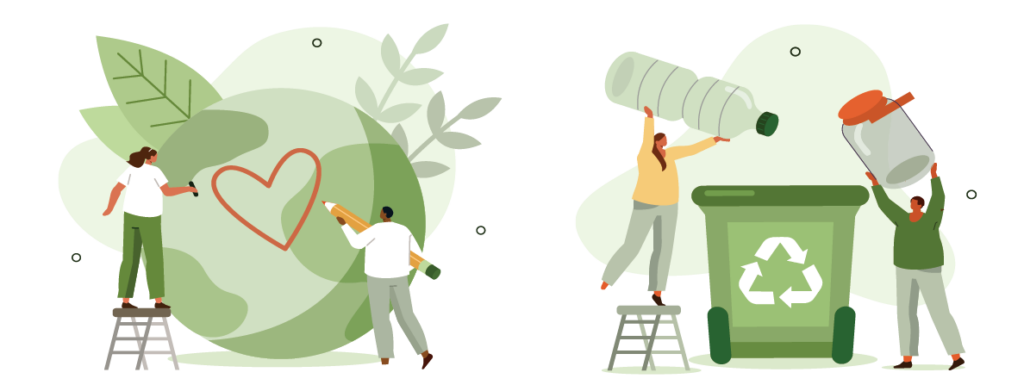
Reduce
Minimize single-use items, disposable wipes, paper, and plastic waste when you can.
Bring a refillable water bottle, travel cups, and stainless-steel straws with you while traveling. You can check apps such as Water-Map for information on free water refills.
Pack a re-usable fabric bag for souvenir shopping.
Keep tickets and travel documentation saved digitally on your mobile device.
Turn lights and electronics off when not needed, and take shorter showers.
Follow the same practices you do at home by reusing bath towels and sheets in lodging spaces.
When you’re in an area with poor mobile coverage, put your phone in airplane mode (or turn it off). The battery of your phone lasts longer, which reduces the need for charging, and hence, saves energy!
Respect
Sustainable travel is about treating the planet and its residents with respect. Whether you want to support a local business or donate to a cause close to your heart, here are a few tips.
When traveling to conservative destinations, research and dress appropriately to respect local sentiments.
Stay on official footpaths for your own safety and to decrease trampling and disturbance of local wildlife.
“Leave no trace” by taking litter with you and recycling plastic waste in receptacles.
Refrain from touching coral reefs or stepping on marine life when snorkeling, as this interferes with the natural regeneration of the sea bed.
Use eco-friendly sunscreen since certain substances are toxic to coral and fish. Mineral-based creams consisting of zinc or titanium oxide are kinder to the environment.
Say no to souvenirs made from animal parts such as ivory, tortoiseshell, or reptile skins.
In areas where wildlife is at risk, reduce noise and light pollution as it may cause distress to certain species.

How to Support Locals When Traveling
One of the greatest gifts of travel is that it allows us to connect with people. Strangers from around the world become friends. Experiences we never imagined become cherished memories….
Read PostSign Up & Save
Join our mailing list and be the first to see our weekly hot deals, the latest blogs and our newest tours.
By clicking “Sign Up” you confirm that you have read our Privacy Policy and consent to our use of your info.